DESIGN + BUILD
Design, Plant and Maintain Garden Beds in Chester County, PA
GreenRoots native plant specialists can help you create beautiful gardens.
Our horticulturists pay attention to the details other crews skip. Sun and shade. Soil and drainage. Deer pressure. Mature size in ten years, not gallon size at the nursery.
We choose plants that hold the look you wanted for far longer than a single season. Planting is the layer of a property that changes most, and it is the layer that gets specified with the least thought. We treat it as design work, not a shopping list.
Planting sits alongside our landscape design and hardscape construction practice. We have been building gardens from our shop in Kennett Square since 2002.
Planting at GreenRoots is a discipline, not an afterthought. Our horticulturalists and native plant specialists design gardens for longevity, ecological health, and visual impact, selecting species suited to this region's specific soil and climate that evolve beautifully from season to season.

What We Plant: Beds, Borders, Containers and Screens
Horticulture on a property is more than one bed. We handle the whole planted layer.
- Foundation plantings. The beds against the house that set the first impression.
- Perennial borders and mixed beds. Layered planting with a bloom sequence that carries the season.
- Privacy screens and hedges. Formal or mixed, evergreen or layered.
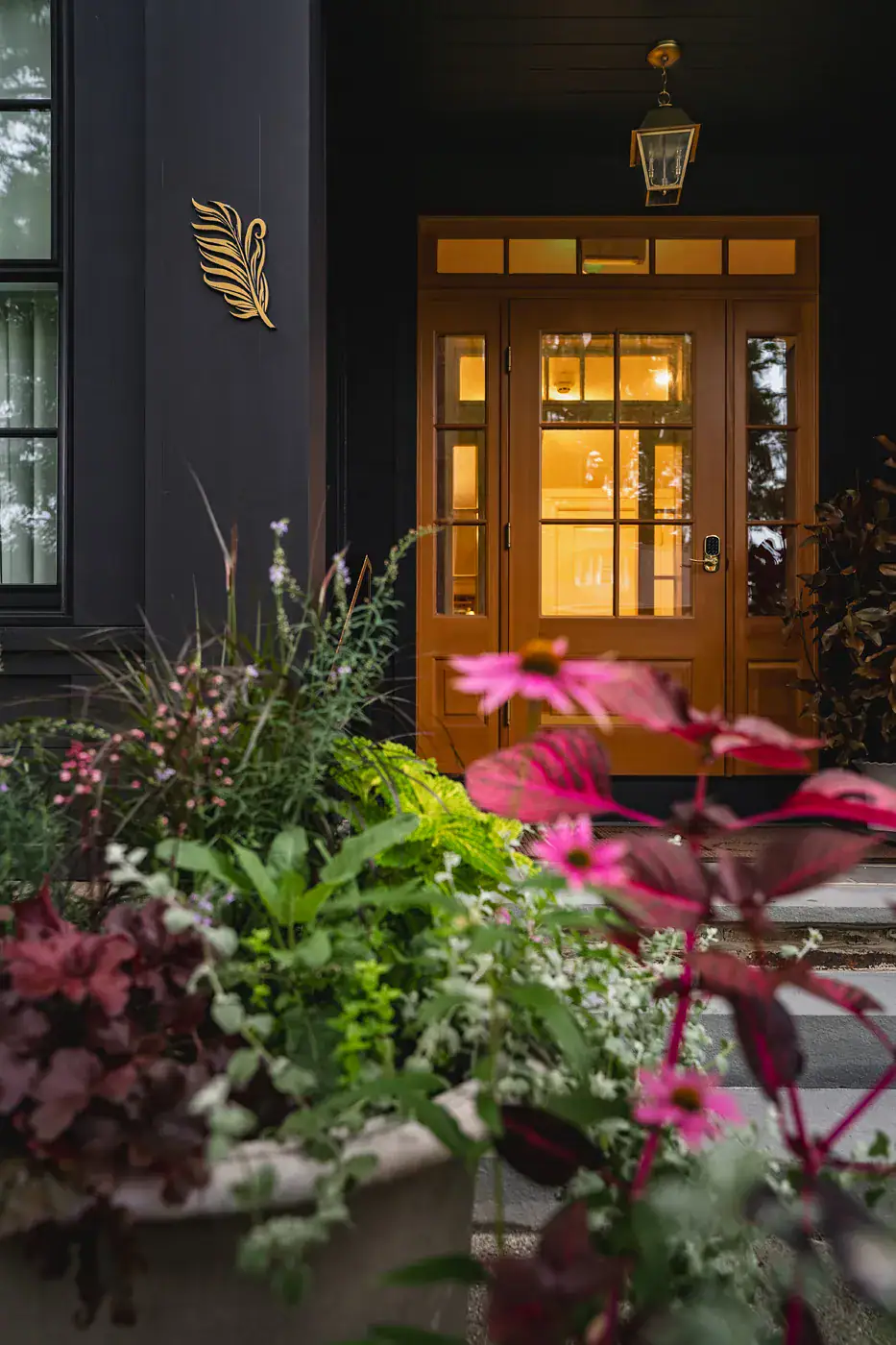
- Containers and planters. Designed as compositions, refreshed seasonally, scaled to the space they sit in.
- Seasonal color. Spring bulbs, summer annuals, fall and winter displays.
- Specimen trees and shrubs. The single plants that anchor a view.
- Meadow and naturalized areas where a lawn is not earning its keep.
- Rain gardens where water needs somewhere to go, tied to our drainage and water feature work.
- Bed preparation. Soil amendment, edging, and mulch at the correct depth.

How We Choose Plants for Your Site, Soil and Light
Every property reads differently. A south-facing slope in Landenberg and a shaded creek bottom in Chadds Ford need different plant lists, even a few miles apart.
Before we specify anything, we look at:
- Sun exposure through the day, bed by bed
- Soil texture, compaction and drainage
- Existing tree canopy and root competition
- Deer pressure and browse history on the property
- Mature size, spread and growth rate
- Bloom sequence across the full season
- How much maintenance you actually want to do
Plants matched to the site need less water, less spraying and less replacement. That is the whole point.
Deer-Resistant Planting for Chester County Properties
Chester County has heavy deer pressure. Most homeowners here have already lost a hosta bed or a row of arborvitae.
Here is the honest version. No plant is deer proof. Bowman's Hill Wildflower Preserve says so plainly in its own guidance, and it is right. A hungry deer in a hard winter will eat almost anything. What exists is a spectrum of preference, and we design along it.
How we handle deer:
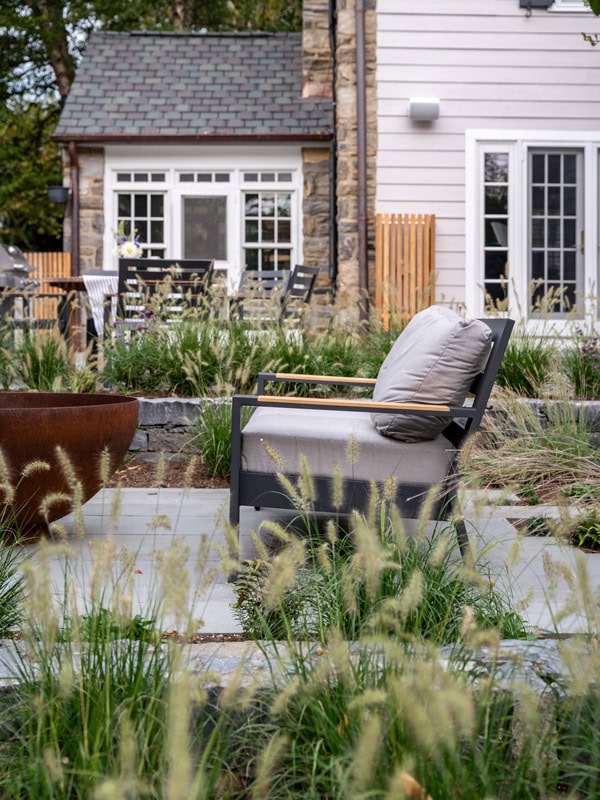
- Lead with the plants deer rarely touch. Boxwood, inkberry holly, juniper, catmint, Russian sage, salvia, most ferns and most ornamental grasses.
- Use texture as defense. Deer browse fuzzy, leathery, aromatic and spiny foliage least.
- Place vulnerable plants close to the house, where foot traffic, lighting and noise discourage browsing.
- Protect new stock through the first two winters. Young plants are softer and more tempting than established ones.
- Tell you which plants are a calculated risk before you pay for them, not after a deer proves the point.

Native Plants, Pollinators and Why Plant Choice Matters Here
We call ourselves native plant specialists, so here is what that means in practice.
Doug Tallamy's lab at the University of Delaware, just across the state line, found that a pair of Carolina chickadees needs 6,000 to 9,000 caterpillars to raise a single clutch. Caterpillars come from native plants. In one side-by-side comparison, a native white oak held 140 caterpillars across 19 species. A similar-sized Asian pear held one.
His research also found that roughly 14 percent of native plants support about 90 percent of caterpillars. He calls those keystone plants. Oaks lead the list in most counties where they grow. Native cherries, willows and birches rank high too.
None of this means giving up a refined garden. It means the backbone of the planting can do ecological work without changing how the property looks.
Mt. Cuba Center in Hockessin sits inside our service area. Its trial garden runs multi-year evaluations of native species and cultivars and publishes the results for free. We read those reports and use them when we specify.
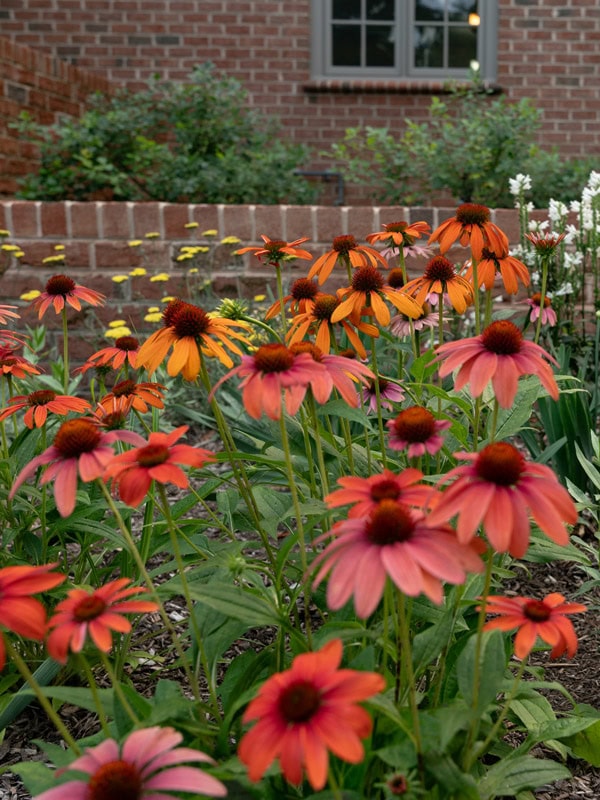
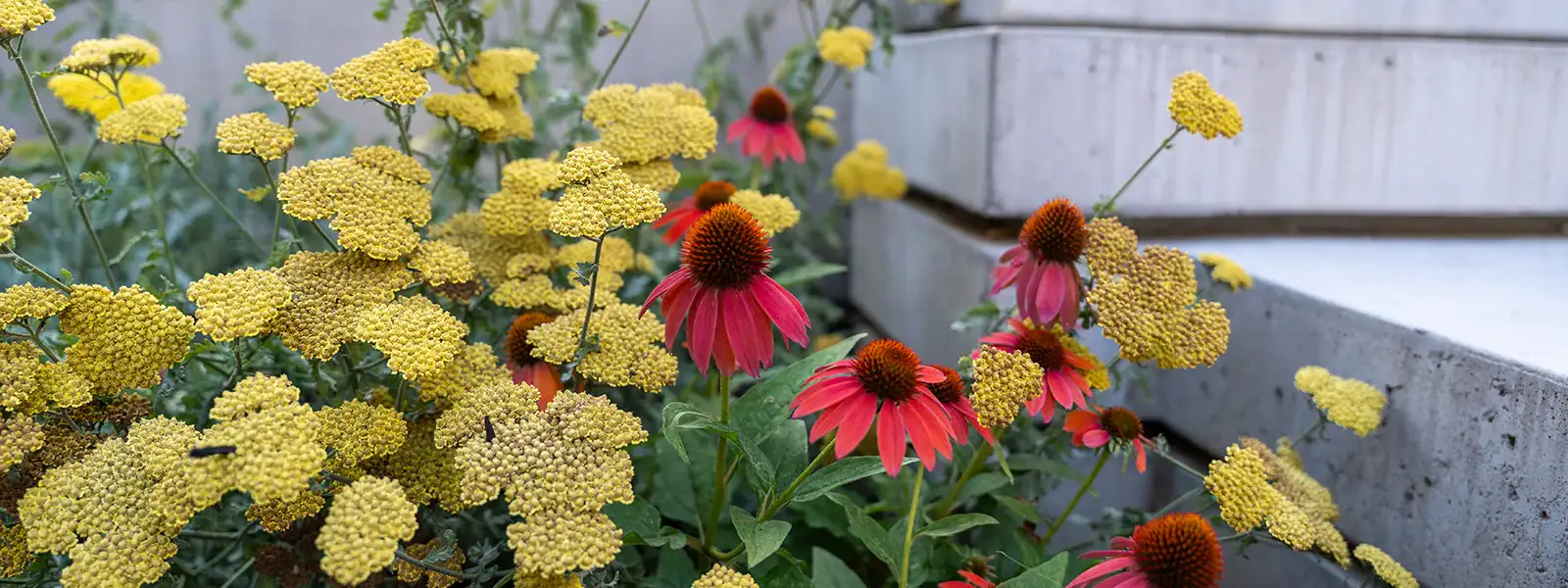
Natives we plant often: oak, serviceberry, redbud and flowering dogwood for structure. Inkberry, Virginia sweetspire, winterberry, viburnum and spicebush for shrub mass. Coneflower, bee balm, mountain mint, aster and goldenrod for pollinators.
Plants Now Banned in Pennsylvania and What to Plant Instead
This one surprises people.
Several shrubs and trees that anchored suburban landscapes for decades now sit on the Pennsylvania Controlled Plant and Noxious Weed List. Selling or propagating them in the state is no longer legal.
The list includes:
- Callery pear, sold for years as Bradford pear
- Japanese barberry, except a few approved sterile cultivars
- Burning bush
- Chinese, European and border privet
- Amur, Morrow's, Bell's, Tatarian and Standish honeysuckle
- Common and glossy buckthorn, except the approved 'Fine Line' variety
If these are already in your beds, you are not in trouble. Nobody is coming for your burning bush. But they keep seeding into the woods behind your property, and replacing them is worth doing on your own schedule.
Penn State Extension recommends native substitutes that read the same way in a design. Allegheny serviceberry, flowering dogwood, pagoda dogwood, hawthorn, eastern redbud, white fringetree and sourwood all do the job a Callery pear was doing. Better fall color, and no smell in April.
Structure, Layering and Four-Season Interest
We create focus, structure and dimension inside a planted bed, and we design for how it looks as it grows rather than how it looks on install day.
That means thinking in layers:
- Canopy and understory trees for scale and shade
- Evergreen shrubs for winter bones, so the beds are not bare from December to April
- Deciduous shrubs for bloom and fall color
- Perennials and grasses for movement and a bloom sequence that carries spring through frost
- Groundcover to close the soil and cut weeding
A good bed has something happening in every season. Winter is the hardest to design for and the easiest to ignore. Bark, berries, seed heads and evergreen mass do that work.
Plantings That Solve Problems, Not Just Fill Space
Plants are the cheapest tool in the box for fixing things a structure would cost far more to solve.
- Privacy. A layered mixed screen beats a single row of arborvitae. It looks better, and it does not fail all at once when one plant dies.
- Shade. The right tree in the right spot cools a patio and a west-facing room.
- Slope and erosion. Deep-rooted plants hold banks that mulch alone will not.
- Vertical surfaces. Vines and espalier soften blank walls, fences and foundations.
- Screening equipment. Pool pads, HVAC units and utility boxes disappear behind well-chosen shrubs.
- Framing a view. Sometimes the job is subtraction, not addition.
Planting also finishes the built work. Beds soften the edges of our outdoor living spaces, and landscape lighting turns a specimen tree into a feature after dark.
Bed Renovation When Existing Planting Has Stopped Working
Most of the beds we are called about are not empty. They are twenty years old and overgrown.
Foundation shrubs swallow the windows. A groundcover has taken the whole bed. Three plants died and were never replaced. The mulch line has crept out and the edge is gone.
Renovation usually means:
- Deciding what stays. A good mature shrub is worth more than anything you can buy.
- Hard pruning what can be recovered, removing what cannot.
- Pulling out invasives and regrading the bed line.
- Rebuilding the soil, which is normally the real problem.
- Replanting in layers so the bed reads as designed rather than patched.
Growing Zones and Planting Windows in Chester County
Chester County sits in USDA hardiness zones 7a and 7b on the 2023 map. That is a half zone warmer than the 2012 map, which put much of the county in 6b. Plenty of local plant lists still quote the old number.
Warmer does not mean easier. Milder winters bring earlier bud break, higher pest pressure and more freeze-thaw damage on plants that woke up too soon. We plan for that rather than pretending it away.
When we plant:
- Spring, roughly April into early June. Best for perennials and anything that needs a full season to root.
- Fall, roughly September into November. Best for trees and shrubs. Warm soil, cool air, and roots that establish without heat stress.
- Summer, with irrigation and honest expectations about watering.
We avoid frozen ground and midsummer heat waves for bare-root and balled-and-burlapped stock.
What Happens After We Plant
Year one is establishment. Year three is when a bed starts to look like the drawing.
Most planting failures happen in the first two seasons, and almost all of them come down to water. We hand you a written care plan, and we take on the maintenance when you would rather not.
First two seasons:
- Deep, infrequent watering rather than daily sprinkles
- Mulch at the correct depth, kept off the trunk flare
- Deer protection through the first winters
- Weed control before anything sets seed
Ongoing:
- Structural pruning at the right time of year for each species
- Dividing perennials before they crowd
- Seasonal container changeovers
- Cutback timing that leaves seed heads and stems for overwintering insects where it makes sense
- Editing. Some plants outrun the plan and need moving.
How We Work
- Site walk. We look at the property, the light, the soil and the deer damage.
- Conversation. What you want it to feel like, and how much upkeep you will realistically do.
- Planting plan. Species, sizes, quantities and placement, drawn to scale.
- Sourcing. We buy from regional growers, so the stock is already adapted to this climate.
- Installation. Our crews plant it, and your designer is on site.
- Care plan and handoff. Written, specific, and ours to execute if you want it.
Where We Plant
We design and install planted beds across:
- Chester County, PA, including Kennett Square, West Chester, Chadds Ford, Landenberg, Avondale, Downingtown and Coatesville
- The Main Line
- New Castle County, DE, including Wilmington, Hockessin and Greenville
We also handle native planting and habitat restoration on public projects through our trail and park work. See the full range on our services page, or browse finished projects in the portfolio.
Garden Bed and Planting FAQs
What is the difference between a horticulturist and a landscaper?
A landscaper installs and maintains. A horticulturist knows why a plant is failing and what will actually thrive on your site. Our team includes both, which is why our plant lists tend to hold up.
Can I hire someone to plant my garden for me?
Yes. We design the planting, source the stock, install it and maintain it. You can hire us for any one of those steps or all of them.
What planting zone is Chester County, PA in?
Zones 7a and 7b on the 2023 USDA map. Much of the county was listed as 6b on the older 2012 map, so older plant tags and local lists may still show that.
Are native plants deer resistant?
Not automatically. Deer evolved alongside our native plants and eat plenty of them. Deer resistance and native origin are two separate questions, and we answer both when we choose a plant.
What shrubs do deer usually avoid in Pennsylvania?
Boxwood, inkberry holly, juniper, spirea and most aromatic or leathery-leaved shrubs get browsed least. No shrub is immune in a hard winter.
Is burning bush illegal in Pennsylvania?
Selling and propagating it is prohibited under the state noxious weed list. Existing plants on your property are not a violation, but they do spread into nearby woodland.
When is the best time to plant shrubs and trees in Pennsylvania?
Fall is usually best. Soil stays warm while air cools, so roots grow without the plant fighting summer heat. Spring works well too.
Do you maintain the beds after you plant them?
Yes. We provide a written care plan with every install, and we offer ongoing horticultural maintenance.
Can a native planting still look formal?
Yes. Structure comes from layout, repetition and edge, not from where a plant originated. We use natives inside formal geometry regularly.
Start With a Walk Through Your Property
Tell us what is failing, what you want it to feel like, and how much time you want to spend on it. We will walk the beds with you and tell you honestly what will work.
Contact us for a planting consultation or call (484) 631-3852.